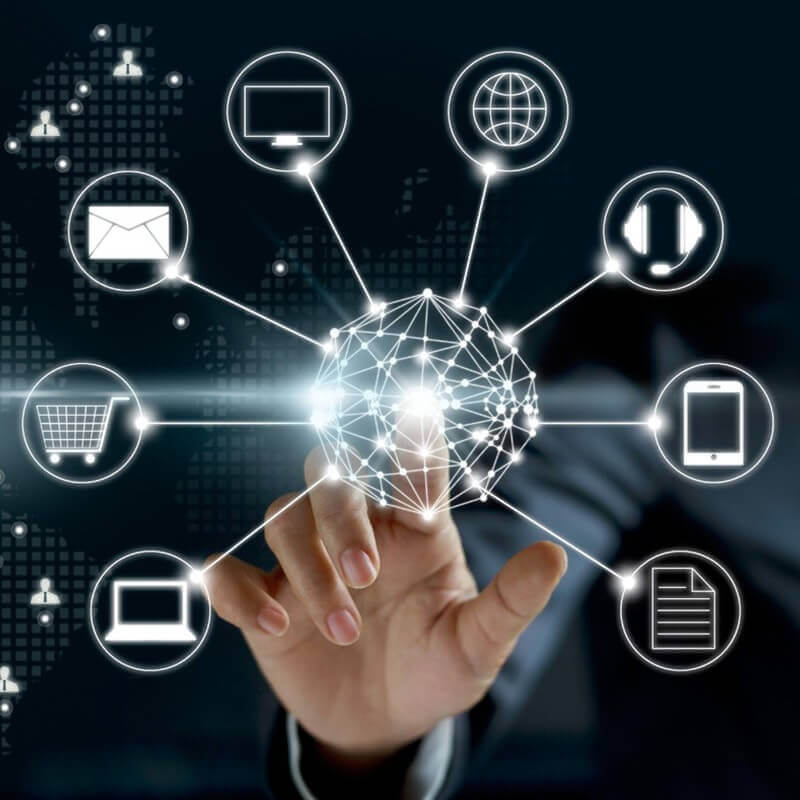
From Punch Cards to Processors: The Origins of ICT
The story of ICT begins in the mid-twentieth century, when the earliest computers occupied entire rooms and consumed enormous amounts of electricity. These machines, operated primarily by government institutions and research universities, were designed for one purpose: processing large volumes of data automatically. They were not tools for communication — they were tools for calculation.
Throughout the 1970s and 1980s, advances in semiconductor technology allowed computers to shrink in size and cost. Personal computers began entering homes and offices, gradually shifting ICT from an institutional privilege to an individual tool. The groundwork was being laid for something far bigger.
The Mobile Revolution: ICT in Your Pocket
- If the Internet brought the world to the desktop, smartphones brought it to the palm of the hand. The launch of touchscreen smartphones in the late 2000s marked a pivotal shift in how people interacted with technology. Suddenly, ICT was no longer confined to a desk or an office — it traveled with its users on commutes, into classrooms, and across borders.
- Mobile applications transformed everyday behaviors. Banking, navigation, photography, entertainment, and communication all converged into a single handheld device. This portability did more than add convenience; it fundamentally altered expectations. People now assumed constant connectivity as a baseline, not a luxury. analysis, process automation, and more intelligent interactions between humans and machines.
Social Media and the New Public Square
- Alongside mobile technology emerged a phenomenon that would redefine human social interaction: social media. Platforms built around user-generated content created new ways for people to share ideas, document their lives, and engage in public discourse. News spread in real time. Communities formed around shared interests regardless of geographic boundaries.
- However, this transformation came with complexity. The same platforms that amplified voices and connected communities also became channels for misinformation, polarization, and the commercialization of personal data. Social media illustrated, perhaps more clearly than any other ICT development, that technology is neither inherently good nor bad — its impact depends entirely on how it is used. real-time health monitoring, and telemedicine facilitates remote doctor consultations.
Cloud Computing: Infrastructure Without Walls
The 2010s introduced a model of computing that quietly revolutionized how both businesses and individuals stored and processed information. Cloud computing eliminated the need for costly physical servers by hosting data and applications on remote infrastructure accessible via the Internet. A startup could now operate with the same computational power as a large corporation, without the capital investment.
For collaboration, the cloud was transformative. Teams spread across different time zones could work simultaneously on shared documents, access the same databases, and communicate through integrated platforms. The physical office began to matter less; what mattered was connectivity.
Artificial Intelligence: The Next Frontier
Today, the most consequential development in ICT is arguably artificial intelligence. Machine learning algorithms now power everything from search engines and recommendation systems to medical diagnostics and autonomous vehicles. AI does not merely process information — it identifies patterns, makes predictions, and in some cases, generates entirely new content.
The integration of AI into ICT infrastructure represents a qualitative shift. Earlier technological advances amplified human capability by handling repetitive tasks faster. AI, however, is beginning to perform tasks that were previously thought to require human judgment. This raises profound questions about work, creativity, and the boundaries of human-machine collaboration.
The Tangible Impact on Society
The effects of ICT’s evolution are visible across every domain of human activity.
In education, the barriers of geography and cost have been significantly reduced. Online learning platforms now offer university-level courses to learners who would never have had access to such resources. During global disruptions — such as the COVID-19 pandemic — digital education tools became lifelines for continuity of learning.
In healthcare, ICT has enabled remote consultations, wearable health monitors, and AI-assisted diagnostics. Patients in remote areas can receive specialist advice without traveling hundreds of kilometers. Real-time health data collection is improving the speed and accuracy of medical research.
In commerce, the rise of e-commerce has reshaped entire industries. Consumer behavior, supply chains, and business models have all been rearchitected around digital platforms. Small producers can now access global markets directly, bypassing traditional intermediaries.
The Challenges That Demand Attention
Progress rarely arrives without cost, and ICT is no exception.
Privacy has emerged as one of the defining concerns of the digital age. As technology companies accumulate vast quantities of personal data, questions about who owns that data — and how it may be used — have become urgent political and ethical issues.
Cybersecurity threats grow in sophistication alongside the technologies meant to counter them. Ransomware attacks on hospitals, data breaches affecting millions of users, and state-sponsored digital espionage are no longer hypothetical risks — they are regular occurrences.
Perhaps most critically, the digital divide persists. While ICT has created enormous opportunities, those opportunities are not evenly distributed. Communities without reliable Internet access, affordable devices, or digital literacy skills remain excluded from the benefits that others take for granted. Bridging this divide is not merely a technical challenge — it is a matter of equity.
Looking Ahead
The trajectory of ICT shows no signs of slowing. Emerging technologies — quantum computing, extended reality, the Internet of Things, and next-generation connectivity — promise to deepen and extend the ways technology is woven into daily life. The question facing societies, governments, and individuals is not whether these changes will come, but how to ensure they serve human flourishing rather than undermine it.
ICT, at its best, is a tool for expanding what is possible. Its future depends on the choices made by those who build it, regulate it, and use it.